 |
| http://lemonodor.com/archives/000943.html |
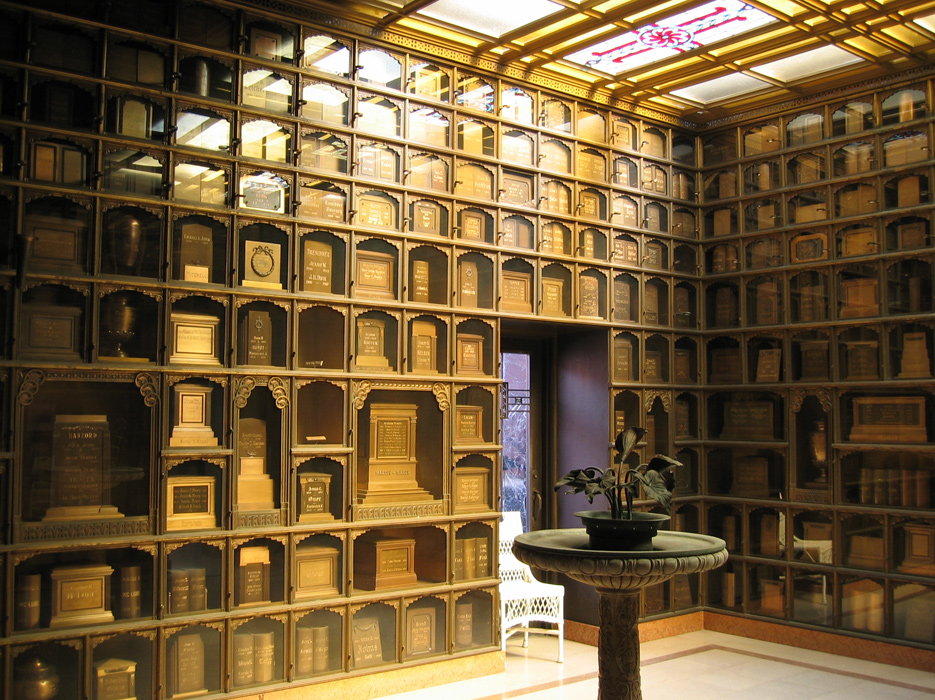
The first is what is called a "columbarium." A columbarium is a room or structure with spaces, or vaults, where cremated remains are stored in urns-I suppose for as long as you want to pay for it, but theoretically forever. I had never heard of these places until this project, but a quick online search reveals they are quite popular. That's why I wanted to include it, plus it is a fabulous picture...
Archaeologiacally speaking, a place like this could resemble the remains of a mausoleum, however actual human remains may not be found as they are by definition cremated. You would also uncover remains of urns provided they are made from a non-organic or non-biodegradable material. These urn would presumably have names and dates which may also alert you to the fact you are digging in a place created for ritual storage of the deceased.
 |
http://designmuseum.org/media/item/61259/58/Carbon-Copy-330.jpg |
The second topic I wanted to share was the work of an artist by the name of Nadine Jarvis (Click here to get a bio). She is challenging post-mortem traditions by creating various object from cremated human remains. Among my favourites are the pencils made with human ash in place of granite, complete with pencil case and sharpener which doubles as an urn. The average human can be made into 240 pencils (dailyundertaker.com).
 |
| http://www.nadinejarvis.com/images/uploads/Bird-feeders_designmart.jpg |
I'm really not sure if either of these treatments would be seen in the archaeological record, at least to the point of discerning any sort of meaning whatsoever. But really, what sort of meanings can archaeologists create out of past funerary rituals? We can make generalizations and educated guesses, but death and the rituals which surround it are so personal, that all we can really do is assume someone was important because of something that was buried beside them. I have relatives who have died and been important to me, but I did not include any personal objects in their internment (or their cremated internment as the case may be), so archaeologically they are just another point a certain distance and direction from the datum.
